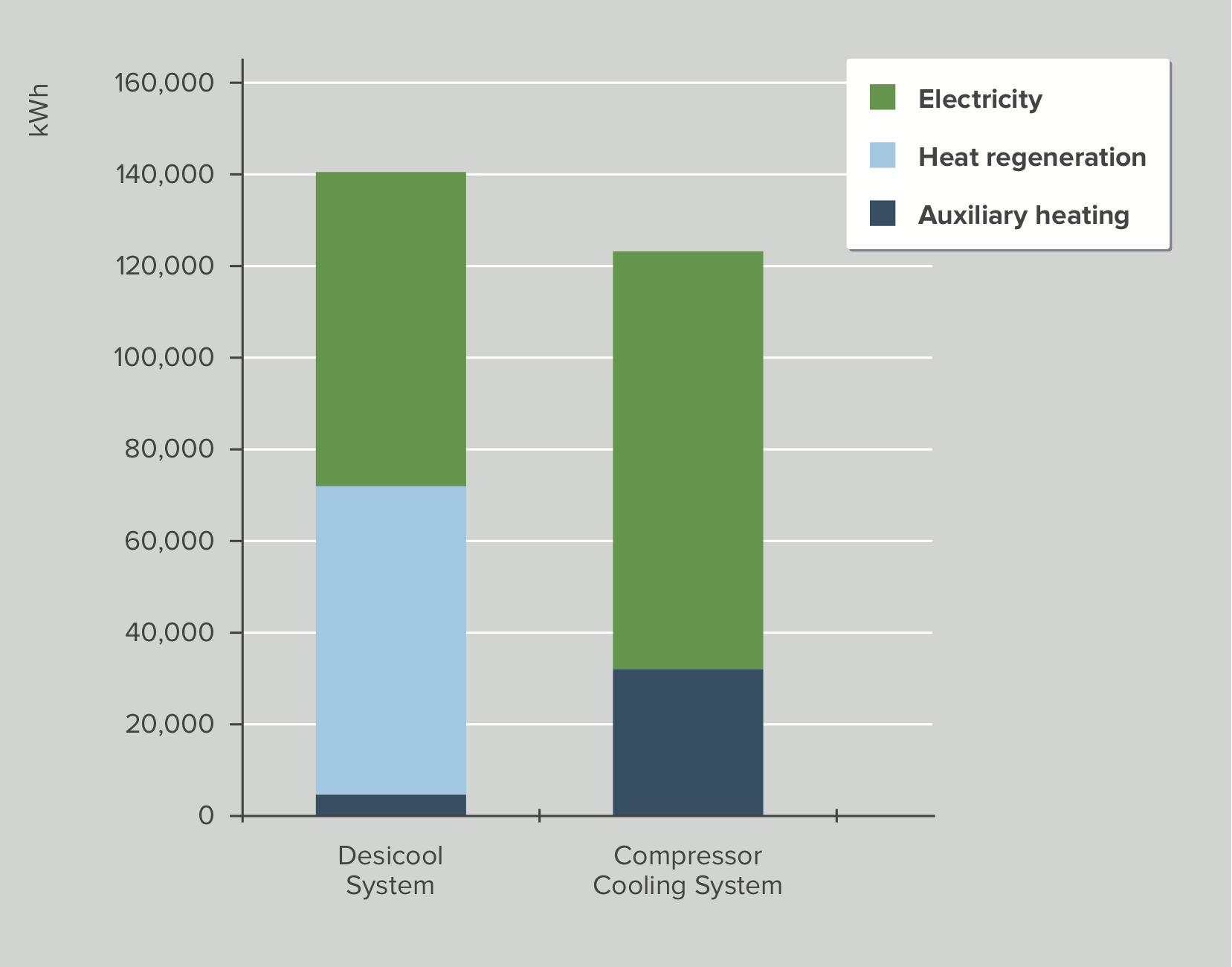
In countries with lower COPs for new air conditioners and less efficient electricity production and distribution than the global average, the case for China and India for instance, thermal chillers can save significant amounts of primary energy. The real benefits of using thermally driven chillers comes from the very large CO2 emissions reductions that are possible in countries with CO2 intensive electricity generation systems, particularly, where renewable heat sources or waste heat is available to drive the chiller. For instance, primary energy savings in offices in Mediterranean and Southern Europe climates can range from 30 to 53%, for instance (Balaras, 2007).
In general thermally driven absorption chillers are significantly more expensive than standard air conditioning systems using the vapour-compression cycle. The costs in the table for small-scale systems are significantly higher than the cost of standard air conditioning systems in Europe (around € 200/kW) and don’t include cooling distribution, which is included in non-ducted splits. In 2009 average costs for absorption cooling packages (including chiller, heat rejection system, pumps and controller; but excluding installation) are between € 1,500 and 3,000/kW and have economic lives of about 20 years (Jakob & Kohlenbach, 2010).
Thermally driven chillers are significantly more expensive than standard vapur compression air conditioning systems. However, costs per kW come down significantly as the size of the chiller increases.
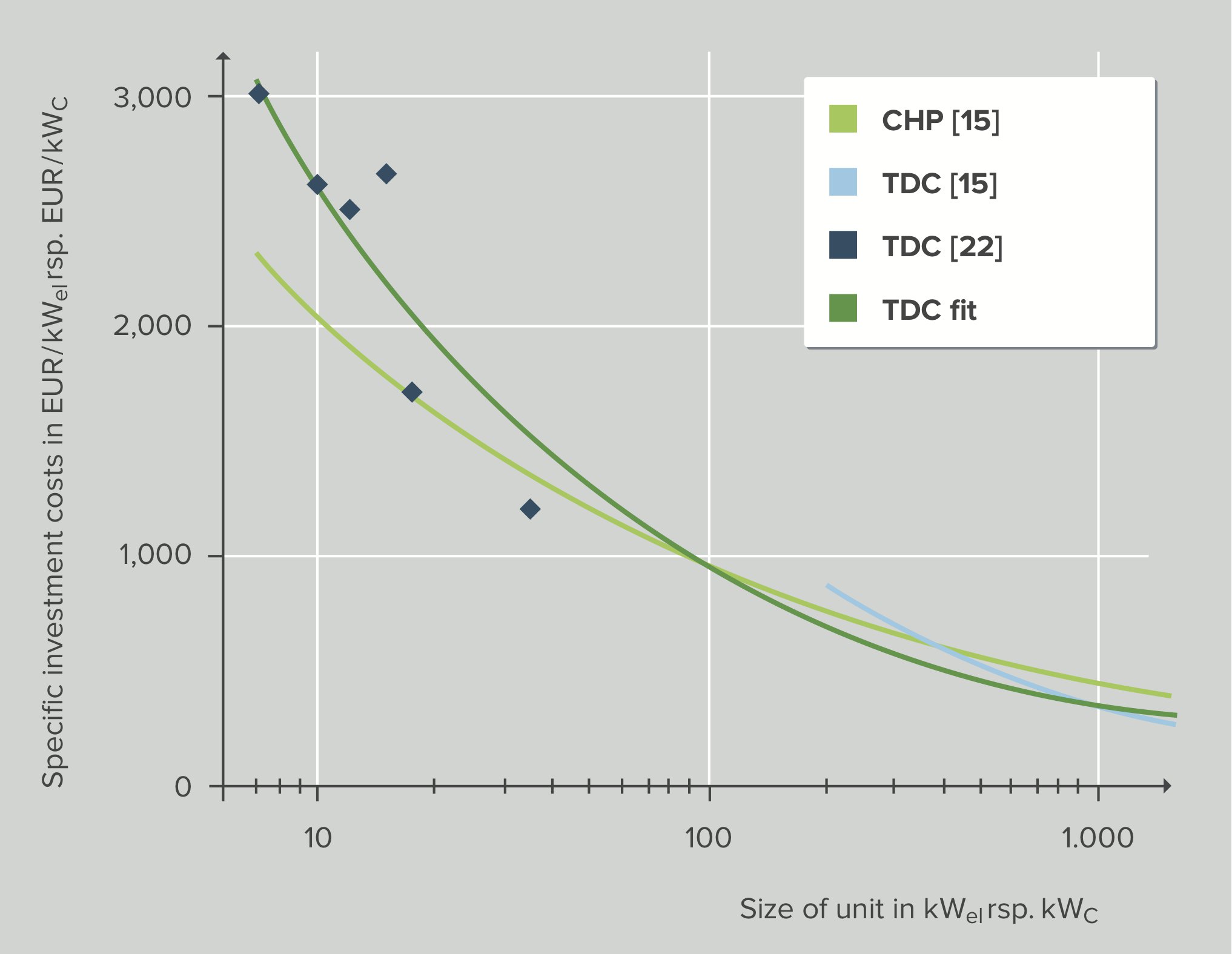
The total costs of small scale (residential) solar cooling systems, including all components required (including the solar collectors) ranges from € 2,000 to € 5,000/kW. Under the best European conditions and with optimised systems, the most economic solar cooling systems can achieve payback periods of 10 years or less. The following tables give indicative costs for absorption and adsorption chillers in Europe. The costs in the table for small-scale systems are significantly higher than the cost of standard air conditioning systems in Europe (around € 200/kW) and don’t include cold distribution, which is included in non-ducted splits. In 2009 average costs for adsorption cooling packages (including chiller, heat rejection system, pumps and controller; but excluding installation) are between € 1,500 and 3,000/kW (Jakob & Kohlenbach, 2010). The total costs of solar cooling systems, including all components required (including the solar collectors) ranges from € 2,000 to € 5,000/kW. Under the best European conditions and with optimised systems, the most economic solar cooling systems can achieve payback periods of 10 years or less.
| Sorption material | Size (kW) | Total cost (€) | Cost per kw (€/kW) |
|---|---|---|---|
| Li-Br | 5-7 | 12,000 | 1,714 - 2,400 |
| " | 10 | 25,000 | 2,500 |
| " | 35 | 25,000 | 714 |
| " | 105 | 40,000 | 381 |
| Sorption material | Size (kW) | Total cost (€) | Cost per kW (€/kW) |
|---|---|---|---|
| Silica gel | 8 | 10,000 | 1,250 |
| " | 70 | 60,000 | 857 |
| " | 100-150 | - | 800 |

makes energy efficiency in buildings and appliances transparent. For investors, policy-makers and actors involved in implementation and consultancy. Learn more ...




 Buildings Guide
  Policy Guide
  Appliances Guide
  India
India South Africa